Road Rehabilitation — Sanare – San Juan de los Cayos
Project sheet
- Sector
- Roadway
- Client
- Municipios Silva y Monseñor Iturriza / Estado Falcón
- Location
- Silva and Monseñor Iturriza municipalities, Falcón State, Venezuela
- Year
- 1998–1999
- Vialpa Role
- Road rehabilitation using Cold Recycling with asphalt emulsion
Project overview
Rehabilitation of the ~35 km Sanare – San Juan de los Cayos road, which had significant longitudinal cracks and isolated asphalt detachments. The road passes through the Cuare Lagoon National Park, a refuge for migratory seabirds, and is the only land route to the town and beaches of Chichiriviche. Legal limitations prohibited dumping material on the roadsides and restricted noise pollution that could harm the ecosystem. The work used the Cold Recycling Method with asphalt emulsion and a Road Recycling Machine capable of milling and crushing the existing pavement to a depth of 30 cm, mixing it with asphalt emulsion in the design proportion, and spreading the recycled mixture in a single operation — using all on-site material with minimal noise. Constructora Vialpa is a pioneer in Venezuela of the Cold Recycling Method, having founded RECAVENSA (Recuperadora de Carreteras Venezolana, S.A.) in 1990.
The Challenge
Rehabilitate a ~35 km road with significant structural deterioration, crossing a National Park of high ecological sensitivity, without allowing material dumping on the roadsides and restricting noise pollution to protect the Cuare Lagoon ecosystem and its migratory birds.
Vialpa Scope
Rehabilitation of ~35 km of road using the Cold Recycling method with asphalt emulsion: milling and crushing of the existing pavement to 30 cm depth, mixing with asphalt emulsion in the design proportion, and spreading of the recycled mixture in a single operation, fully reusing the in-situ material.
Engineering / Construction Approach
Application of the Cold Recycling method using a Road Recycling Machine that milled, crushed, mixed with asphalt emulsion, and spread the mixture in a single pass, eliminating the need to haul new material and minimizing noise and environmental impact within the Cuare Lagoon National Park. Vialpa, a pioneer of the method in Venezuela through RECAVENSA (founded in 1990), ensured compliance with ecological restrictions and continuity of access to Chichiriviche.
Operational Constraints
Road within the Cuare Lagoon National Park: prohibition of material dumping on roadsides and noise pollution restrictions to protect the ecosystem and migratory seabirds; sole land route to Chichiriviche.
Technical Highlights
- Rehabilitation of ~35 km of road using the Cold Recycling method
- Recycling to 30 cm depth with asphalt emulsion, reusing material in situ
- Sole land route to Chichiriviche crossing the Cuare Lagoon National Park
- Vialpa pioneer of Cold Recycling in Venezuela; founded RECAVENSA in 1990
Key Quantities
Photographic archive and field execution
Original photographic field documentation of road execution, structures, concrete barriers and earthmoving by Constructora Vialpa.
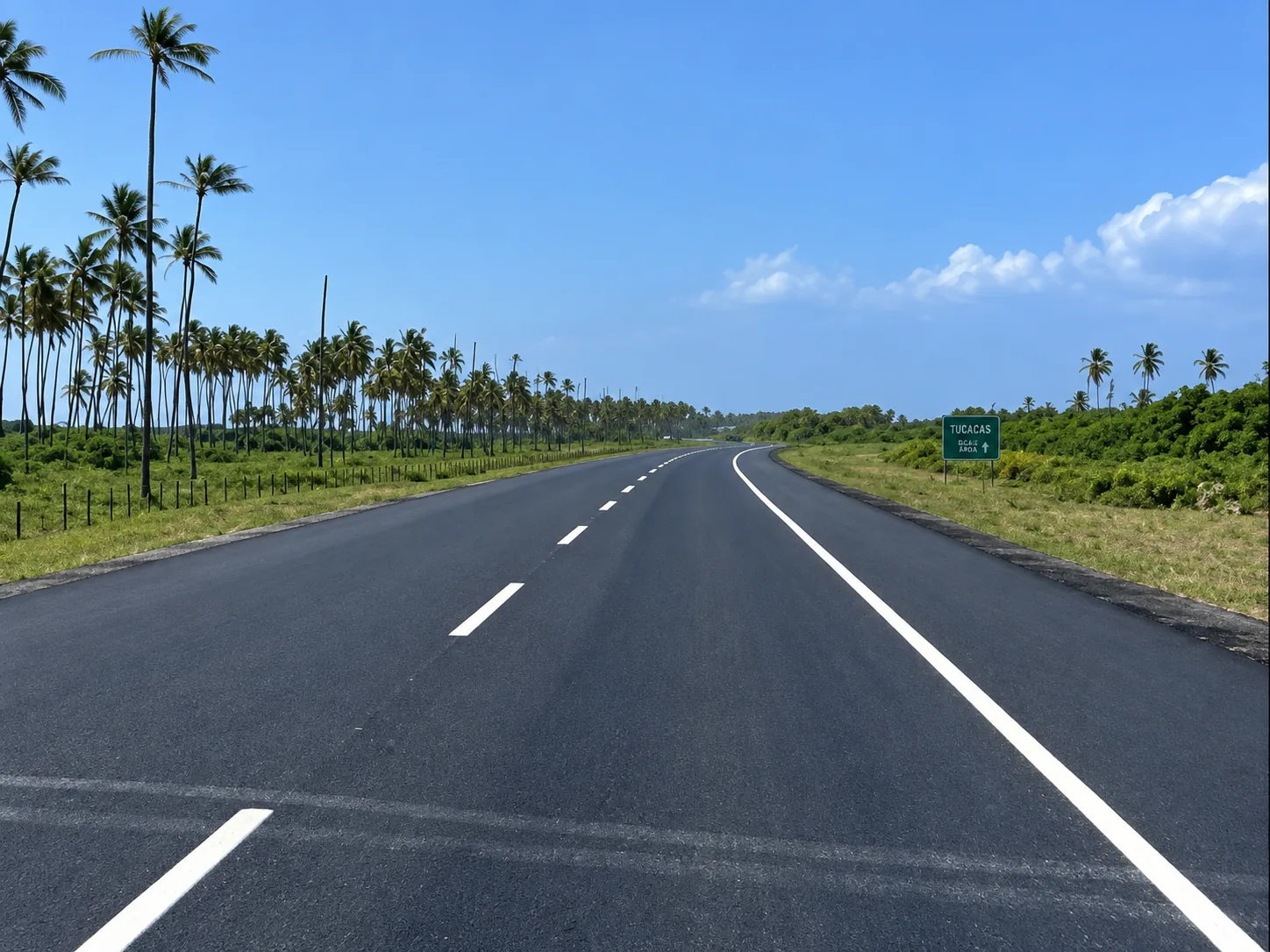
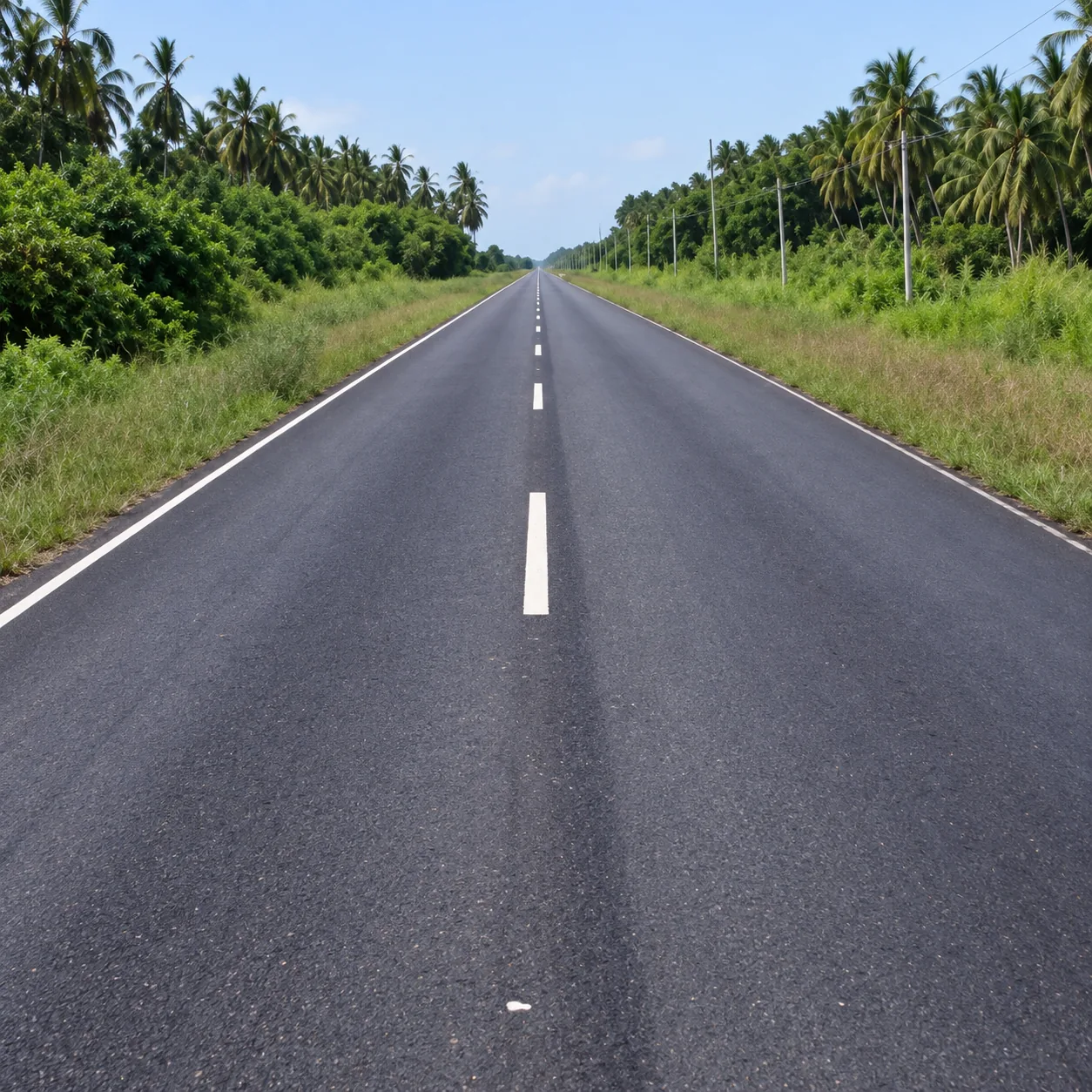
Completed Sanare – San Juan de los Cayos road marked with continuous and dashed horizontal pavement striping through the ecological corridor
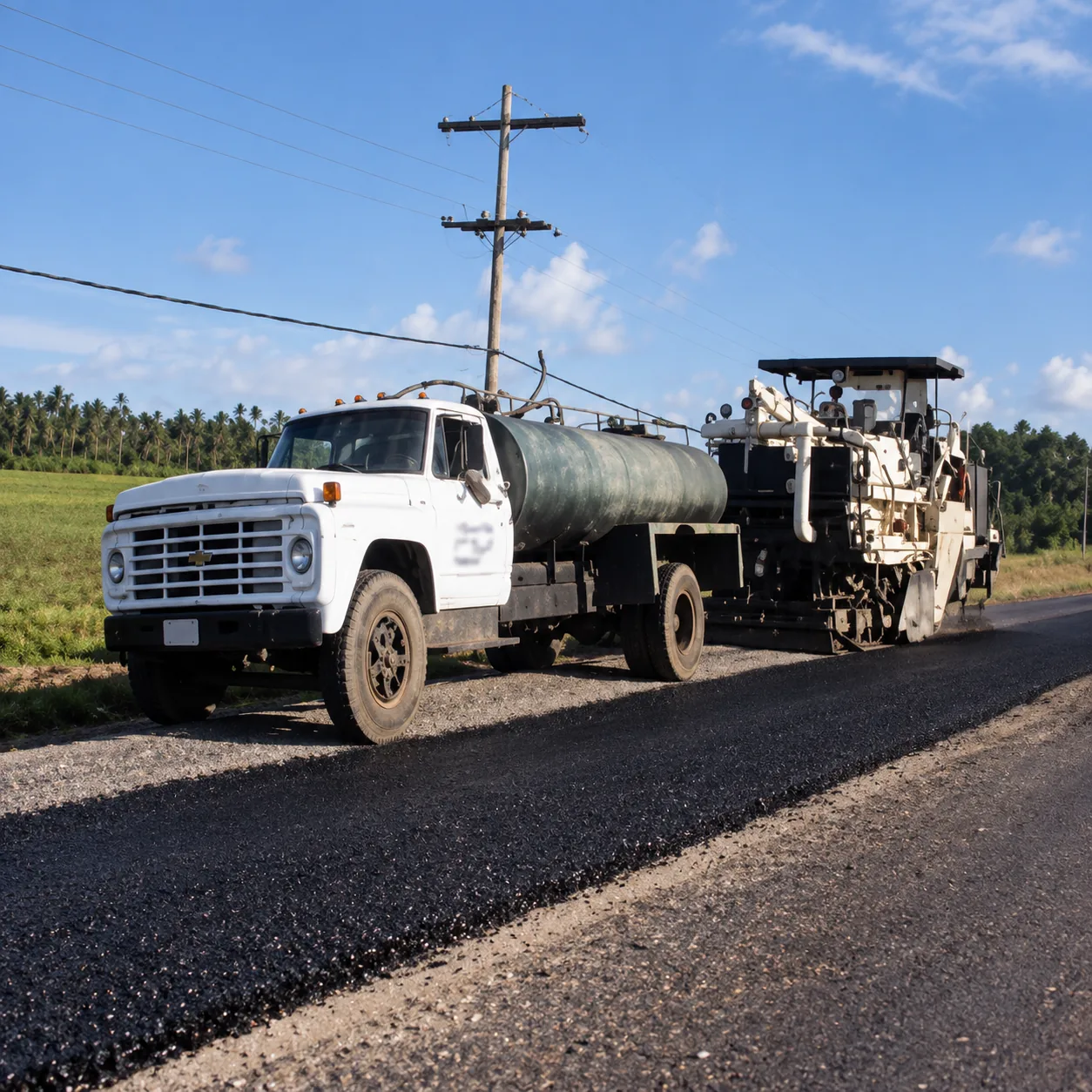
Cold recycling train operating on site: tanker truck injecting asphalt emulsion coupled to road recycling machine milling and paving in continuous pass
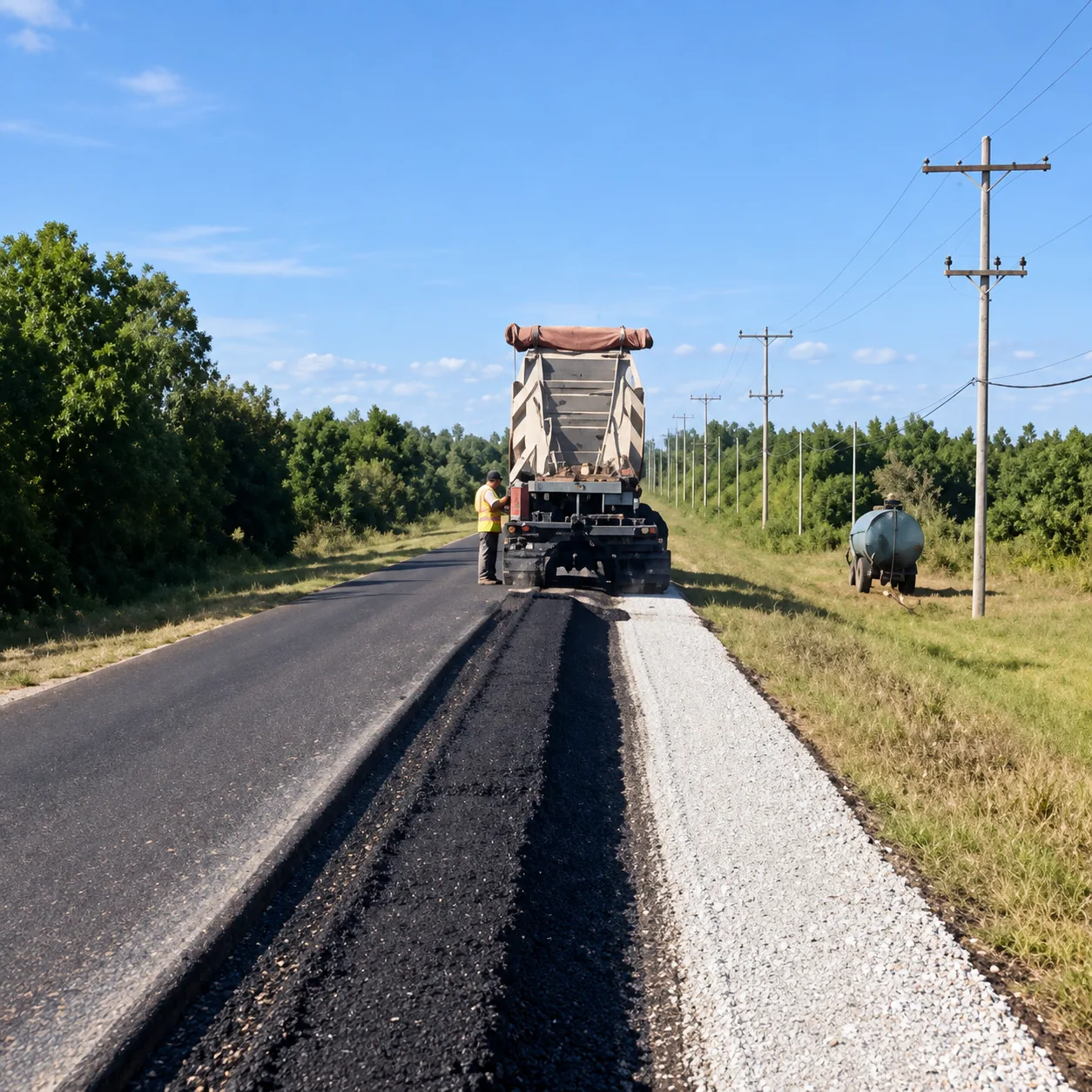
Mix spreading and aggregate shoulder construction supported by hopper dump truck and field technical crew
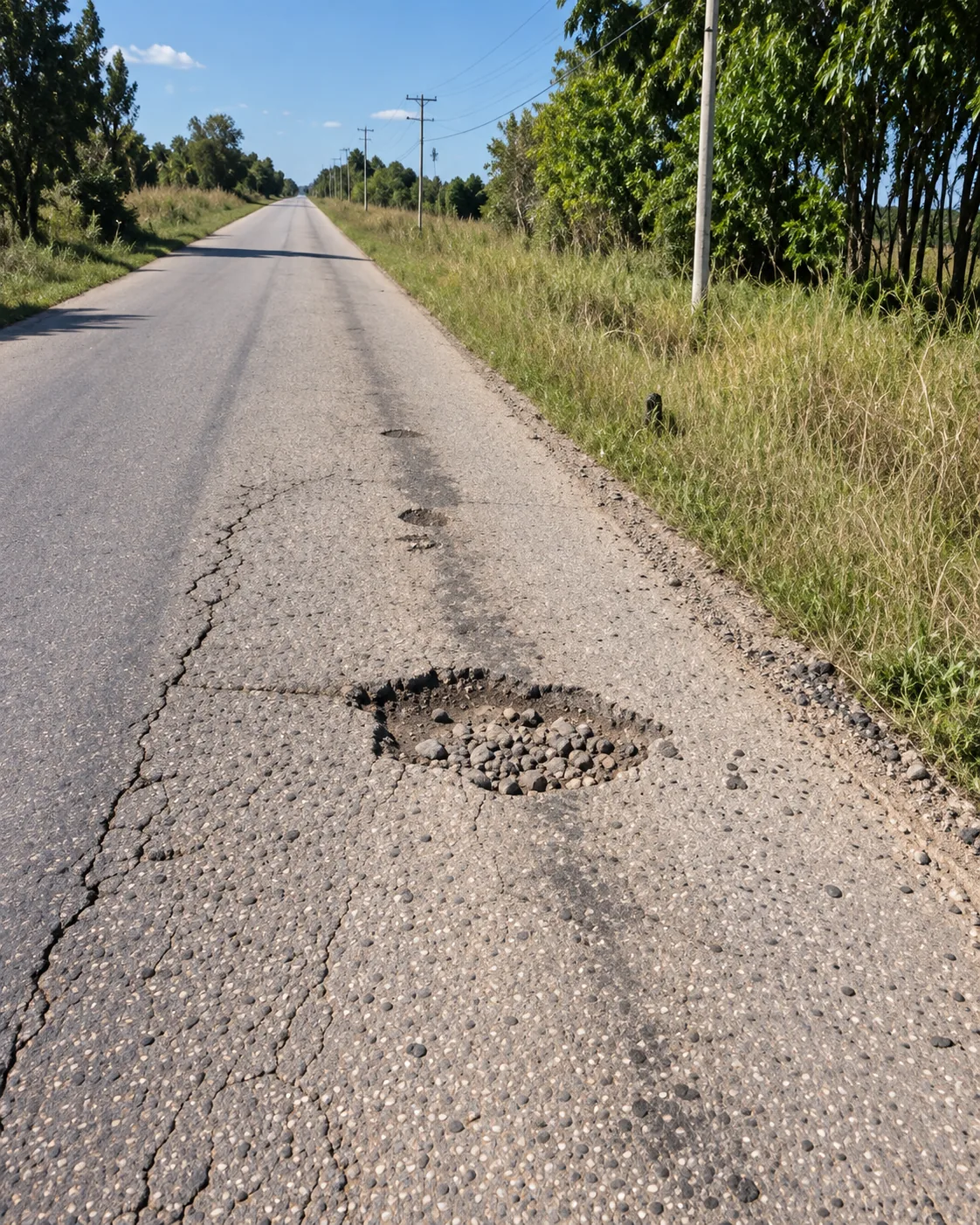
Pavement condition prior to intervention: severe deterioration with deep potholes, asphalt surface detachment, and longitudinal cracking before in-situ recycling